Are Orphans That Different?
Orphans’ growth advantage over non-orphans is narrowing, and category leader Darzalex set to exceed $16 billion by 2030. Are orphans really a class apart?
By Melanie Senior
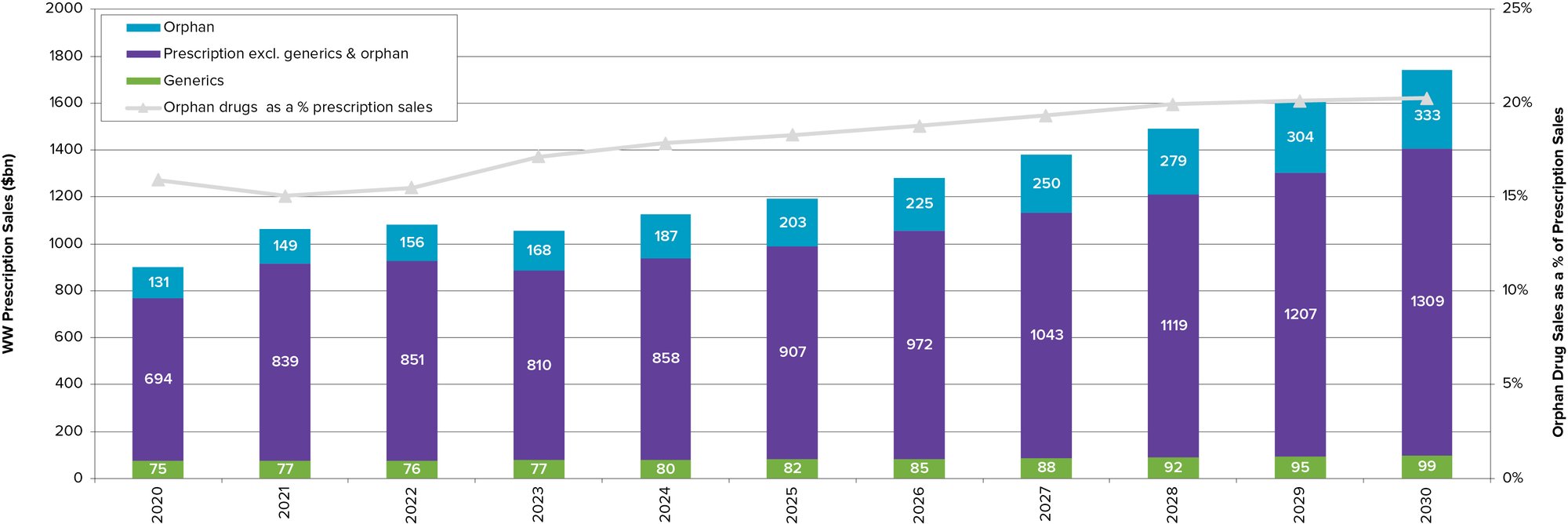
By 2030, orphan drugs will make up fifth of the forecast $1.6 trillion in worldwide prescription drug sales – a share that has doubled over the last decade.
Orphans will continue to outpace their mainstream counterparts for a few years yet: the category’s 2025-2030 forecast compound annual growth rate (CAGR) tops 10%, versus 7.5% for non-orphan prescription drugs.
But orphans’ growth advantage looks set to slip to just 1% by the end of the decade, potentially marking the end of an extraordinary run.
Orphans’ growth advantage looks set to slip to just 1% by the end of the decade, potentially marking the end of an extraordinary run.
Buoyed by considerable regulatory and exclusivity advantages, some orphan drugs now resemble mainstream pharmaceutical blockbusters, and dynamics within some niche markets mirror those across more prevalent disease areas. With growth rates for orphan and non-orphan categories also converging, this begs the question: should orphans still be considered a class apart?
Worldwide Orphan Drug Sales & Share of Prescription Drug Market (2020-30)